

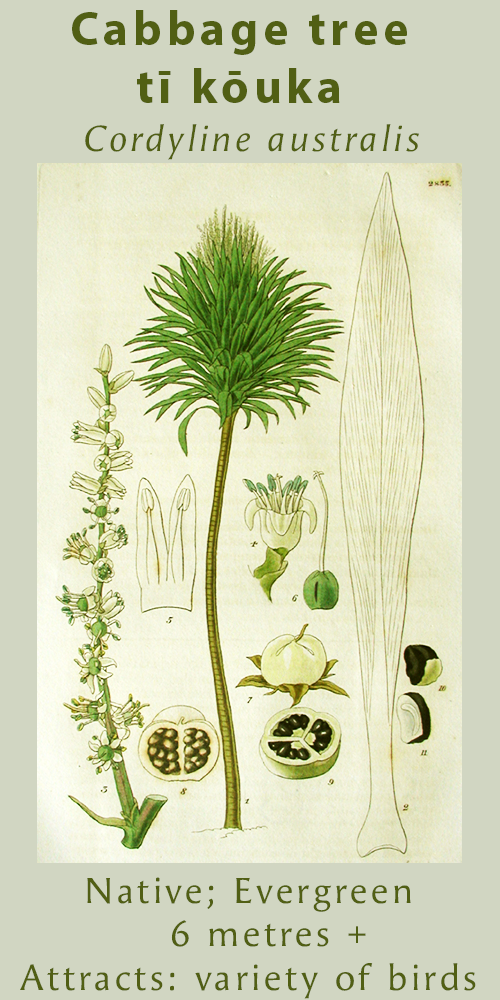
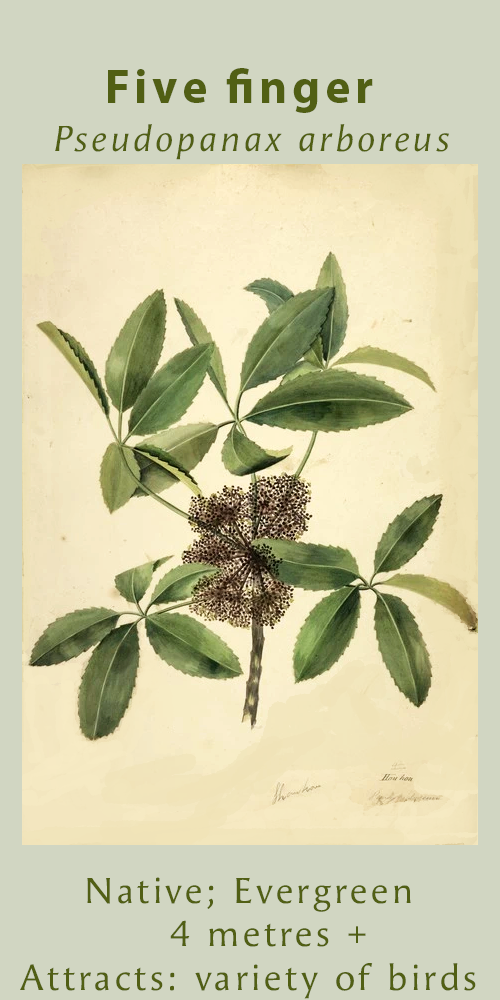
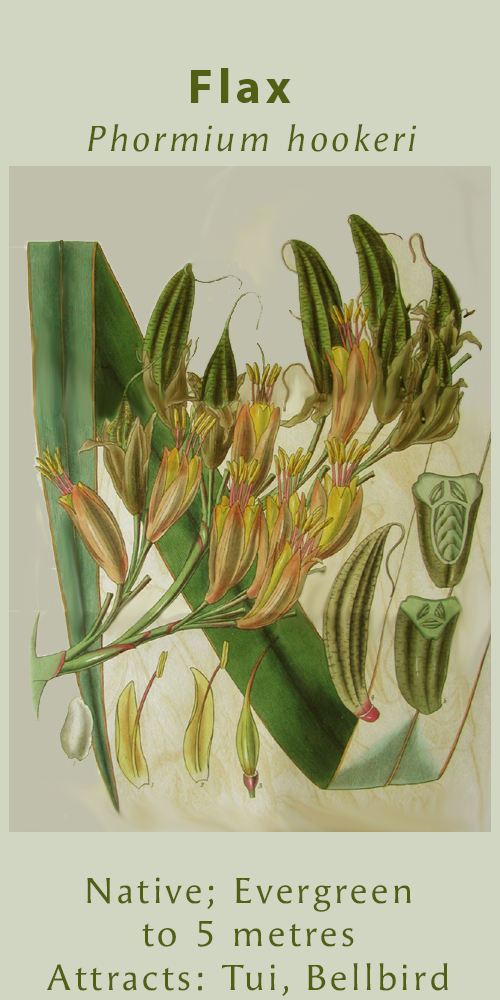
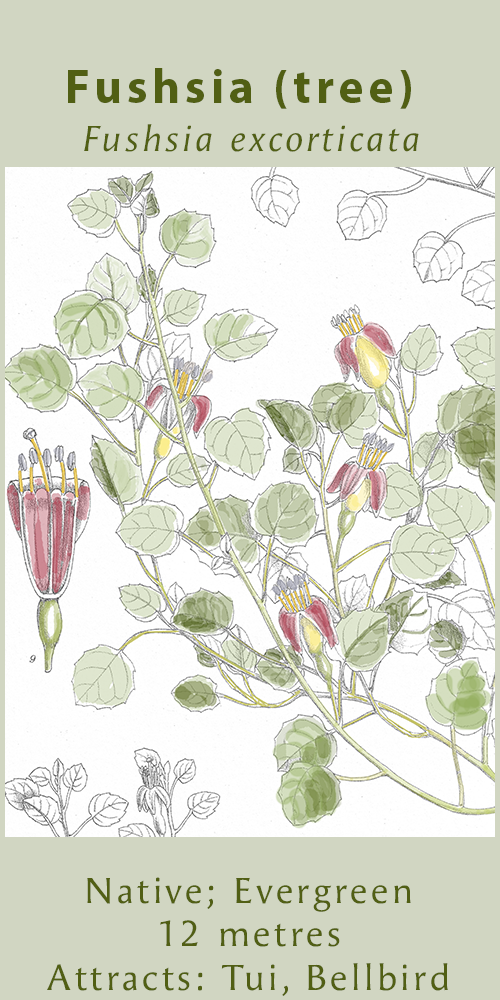
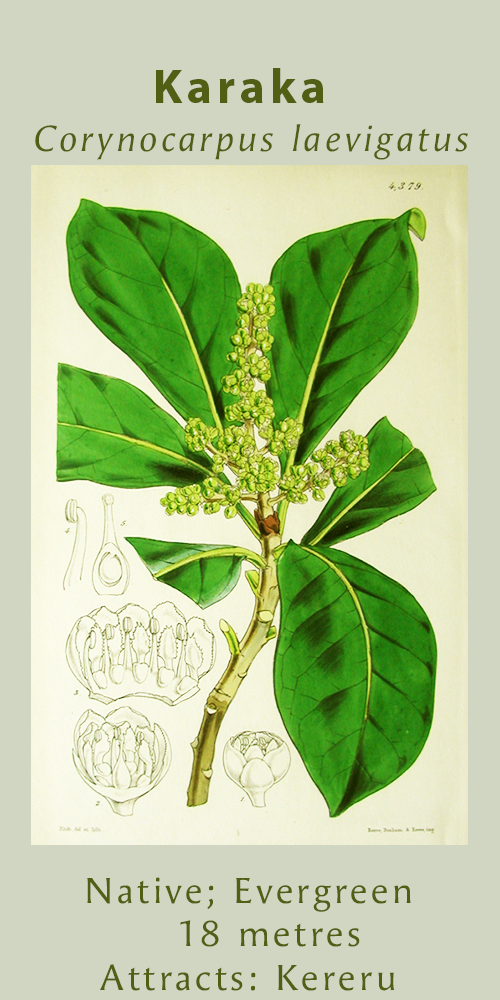
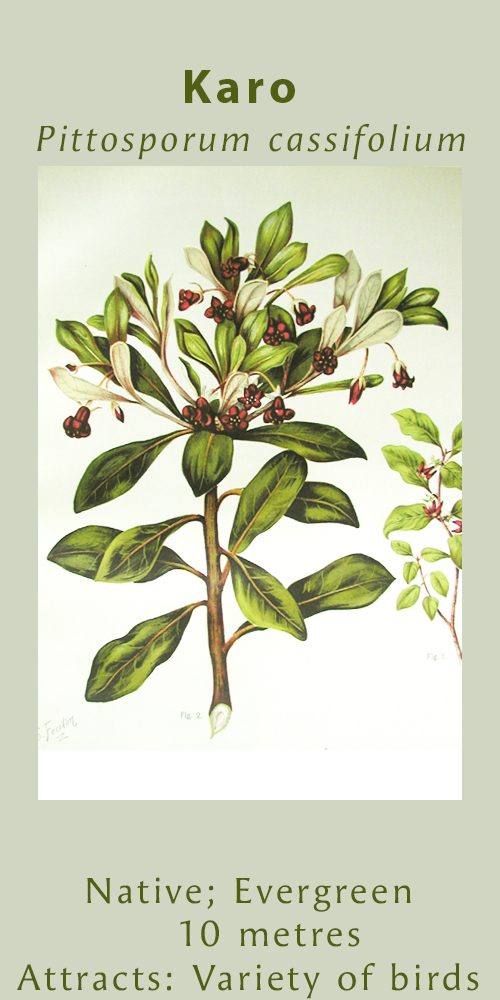
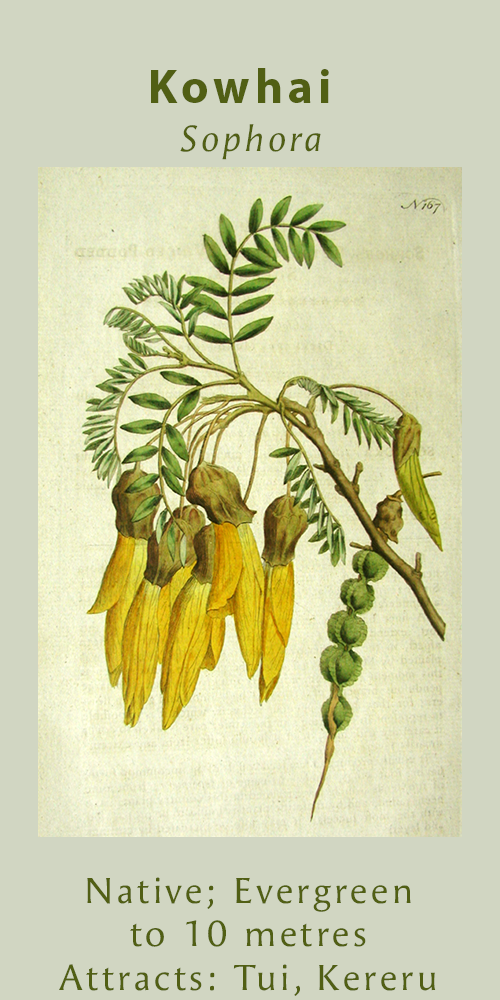
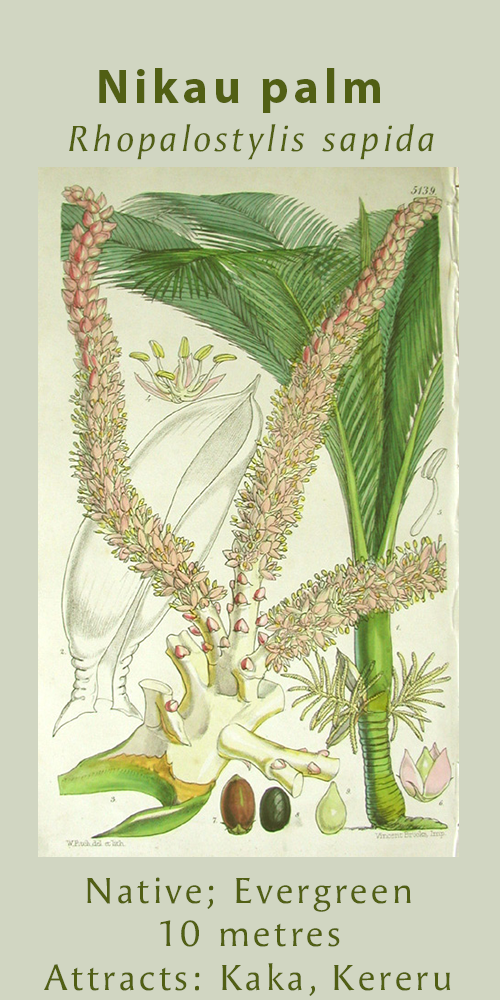
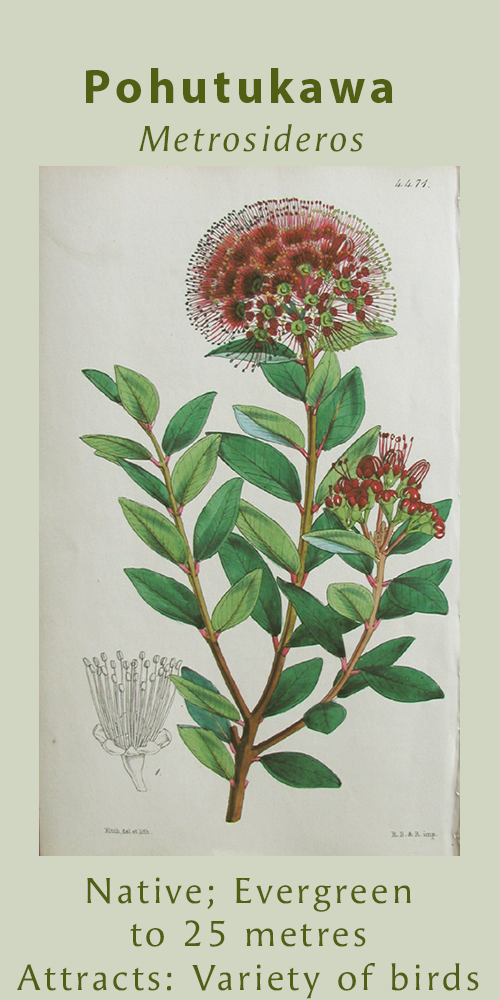
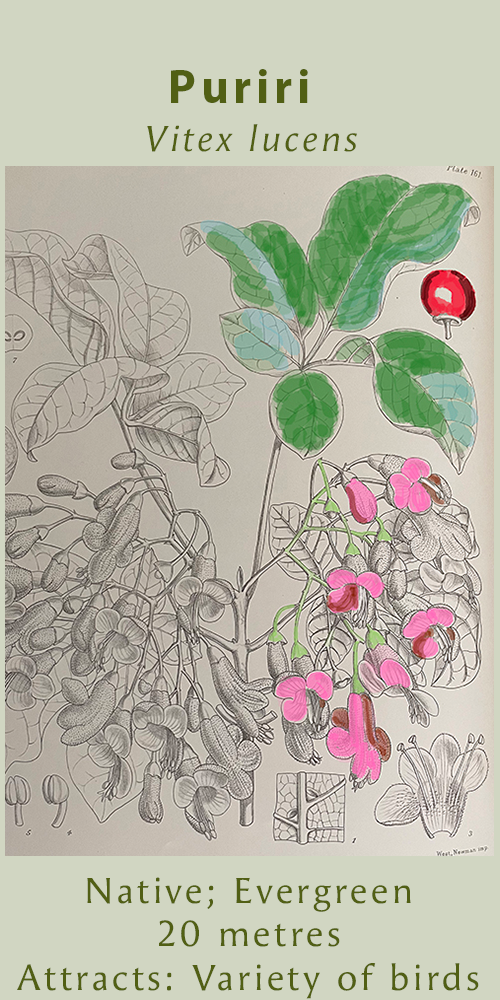
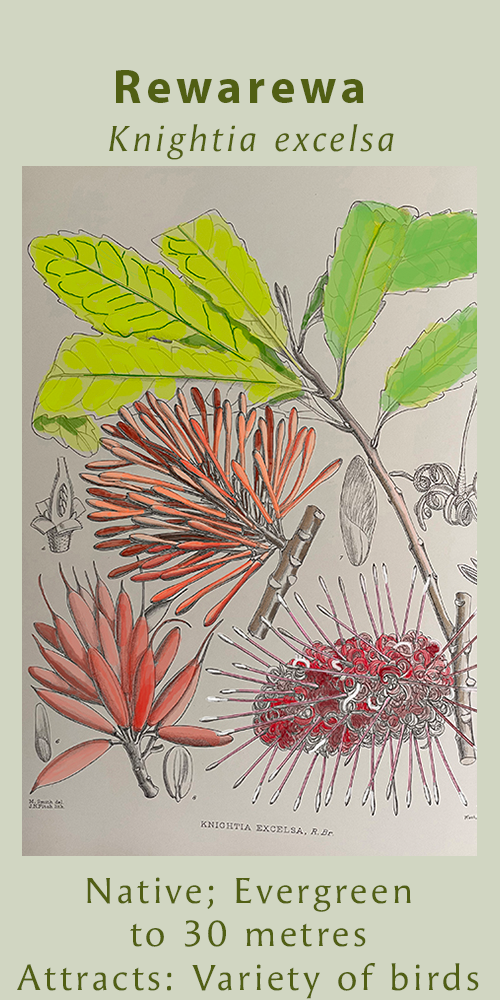
| Common Name | Botanical Name | E/D | Height | Bird Visitors |
|---|---|---|---|---|
| Tecomanthe | Tecomanthe speciosa | E | 5 metres | Tui |
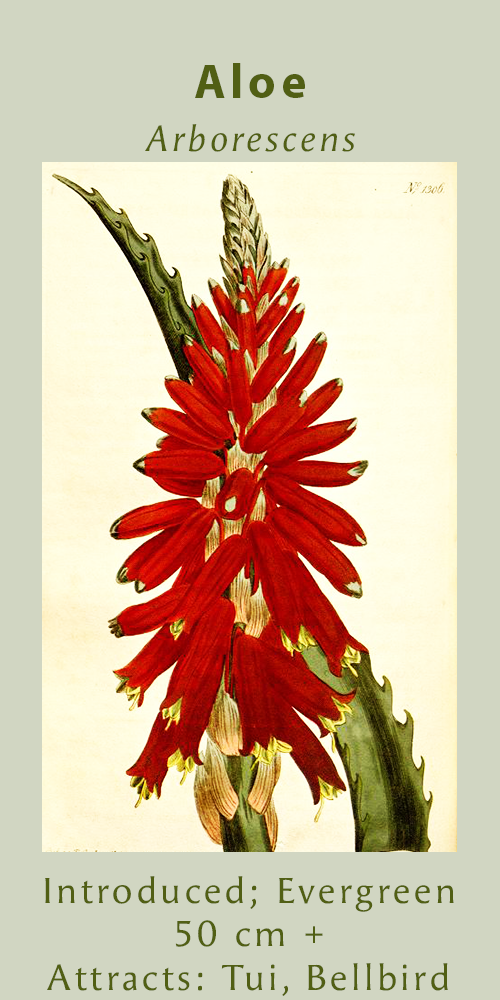

| Common Name | Botanical Name | E/D | Height | Bird Visitors |
|---|---|---|---|---|
| French marigold annual | Tagetes patula | 30 cm | finches | |
| Lavender (various) | Lavendula spica | E | 50 cm+ | finches |
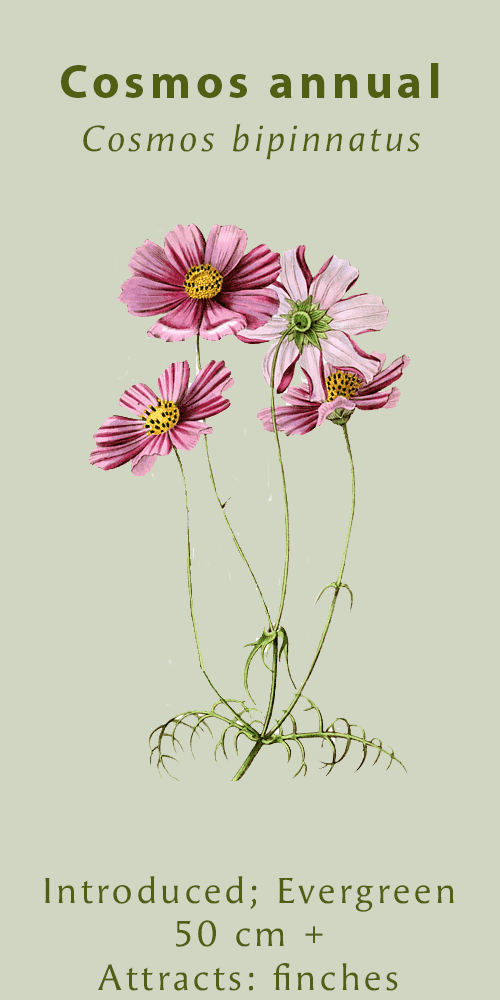
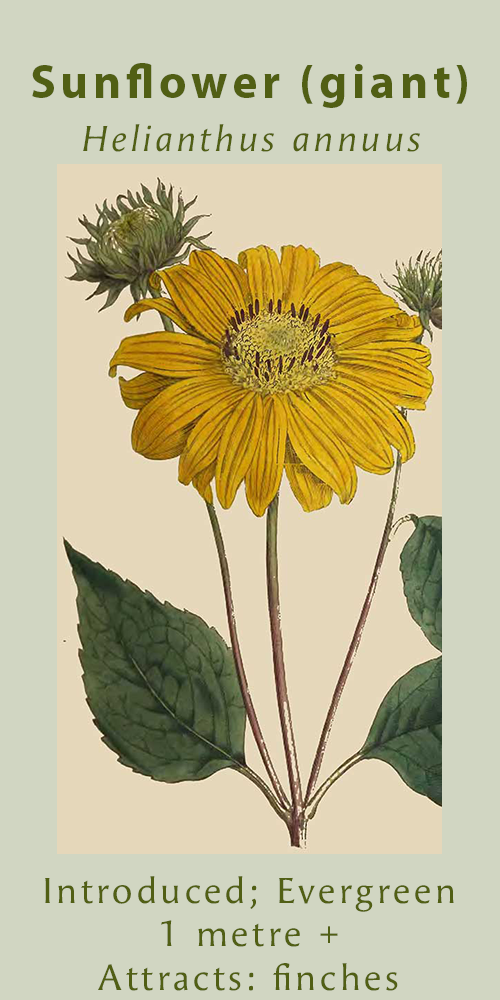
| Love-lies-bleeding annual | Amaranthus caudatus | to 1metre | finches | |
| Phygelius (sub-shrub) | Phygelius aequalis | E | 1 metre | bellbird |
| Common Name | Botanical Name | E/D | Height | Bird Visitors |
|---|---|---|---|---|
| Bastard jasmine | Cestrum purpureum | E | 3 metres | Tui, bellbird |
| Chinese lantern | Abutilon | E | 2 metres + | Tui, bellbird |
| Chinese holly* | Mahonia lomariifolia | E | 3 metres | variety of birds |
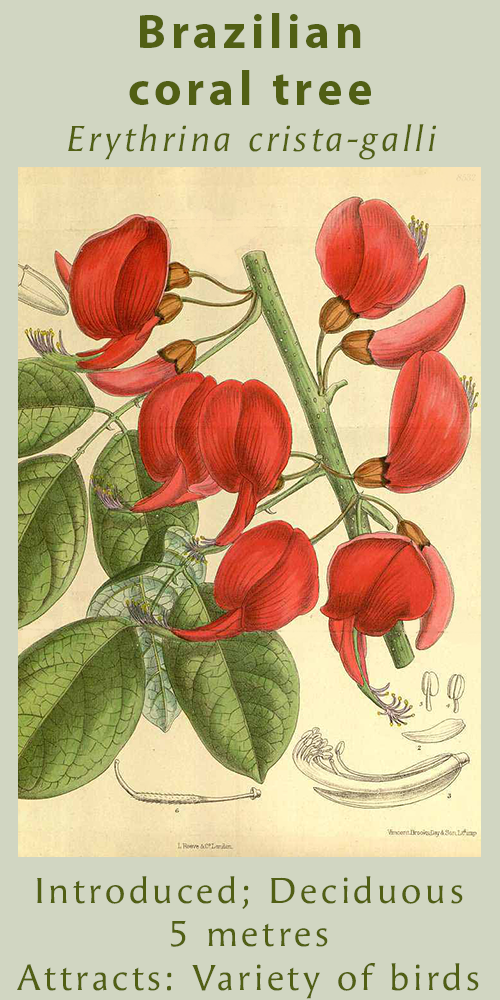
| Coral tree | Erythrina sykesii | D | 15 metres | variety of birds |
| Common Name | Botanical Name | E/D | Height | Bird Visitors |
|---|---|---|---|---|
| Firewheel tree | Stenocarpus sinuatus | E | 6 metres | variety of birds |
| Grevillea (various) | Grevillea | E | to 3 metres | variety of birds |
| Mulberry | Morus nigra | D | 5 metres | variety of birds |
| Phoenix palm | Phoenix canariensis | E | 6 metres | variety of birds |
| Taiwan cherry* | Prunus campanulata | D | 6 metres + | Tui, bellbird |
| Chilean bell flower | Lapageria rosea | E | 5 metres | bellbird |
Parapara, Pisonia brunnonianum. This is also called the “bird catcher tree”. The seedpods are extremely sticky and small birds become caught on the pods. Larger birds (like the morepork) also become trapped when they try to predate on the ensnared bird. One way to get over this problem, is to cut off the seedpods before they reach the sticky stage. The plant uses the dead birds as nutrients for the seeds when the ripe seed falls off with the dead bird.
IntroducedRhododendron, Rhododendron.
Each year tui are brought into bird rescue centres with poisoning from rhododendrons. It is extremely poisonous. I have found that if a camellia is visited by tui in the flowering season, and a rhododendron, of the same colour, is flowering
nearby, the tui may visit the rhododendron to feed.
In my experience, it was a red rhododendron. This has now been removed. If tui are not treated quickly they will die with rhododendron poisoning. (Rhododendron is also toxic to stock).
*As some introduced trees and plants can become plant pests in some area please contact your local Regional Council for a list of plant pests.
Information for this page was sourced by Rosemary Tully.
Please email any additions or corrections to: [email protected]